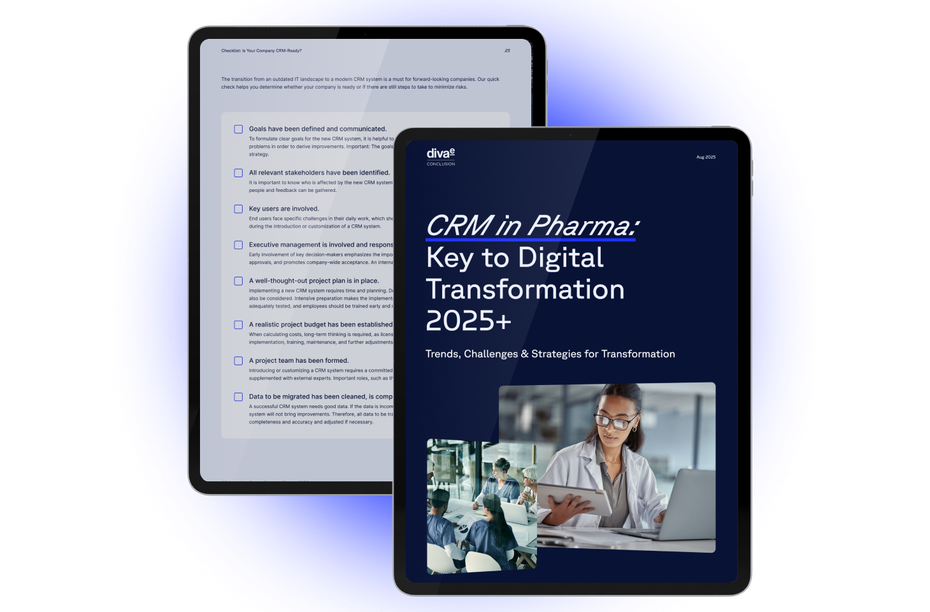
CRM in Pharma: Key to Digital Transformation 2025+
The pharmaceutical industry is entering a decisive turning point in 2025+: Personalized medicine, strict regulatory requirements, and digitally empowered customers are increasing transformation pressure – shifting CRM from an operational tool to a strategic control center.
Our guide not only provides an exclusive comparison of the leading CRM providers but also clear recommendations for maximum customer centricity, compliance, and AI-driven efficiency.
What's Inside?
5 digital trends in healthcare and their impact on CRM
CRM as an enabler: from IT modernization to AI-driven predictive CRM
5 specific use cases for marketing, sales & patient journeys
Regulation & compliance by design: GDPR, MDR, DSA & NIS2 made practical
Exclusive CRM comparison: Veeva Vault CRM vs. Salesforce Life Sciences Cloud vs. IQVIA OCE
Checklist: Is your company CRM-ready?
Frequently Asked Questions (FAQ)
The Pharma CRM Guide covers the strategic use of customer relationship management systems in the pharmaceutical industry. It explains industry-specific requirements, regulatory frameworks, and aspects of digital transformation. The focus is on the structured management of customer and stakeholder relationships in the healthcare environment.
The guide is aimed at decision-makers in pharmaceutical companies, particularly in sales, marketing, IT, and digital roles. It is relevant for organizations planning to introduce, modernize, or strategically develop CRM systems. Companies with complex field sales and multichannel structures are especially addressed.
CRM in the pharmaceutical sector is subject to strict regulatory requirements and industry-specific compliance standards. It must also address complex stakeholder structures, including physicians, clinics, and other healthcare professionals. Data security and transparency are central considerations.
Digitalization enables integrated multichannel communication and data-driven management of customer interactions. CRM systems form the foundation for personalized engagement and efficient sales processes. A modern system architecture supports consistent workflows across different channels.
Challenges result from legacy IT landscapes, complex data structures, and organizational silos. Regulatory requirements and data protection regulations must also be considered. A clear strategy and defined governance are essential for successful implementation.
A CRM system structures customer information, interactions, and sales activities. It provides transparency across touchpoints and supports data-driven decision-making. This enables closer collaboration between field sales and marketing teams.
The guide positions CRM not only as a technical system but as part of a holistic sales and digital strategy. Topics such as system integration, process optimization, and change management are discussed. The objective is to establish a sustainable and scalable CRM architecture.
The guide is available as a PDF document. It is structured as a text-based resource providing a systematic perspective on CRM strategies in the pharmaceutical sector. The content is suitable for independent reading and internal knowledge sharing.